The Ninth Floor Pavilion
by PageCrave Editorial
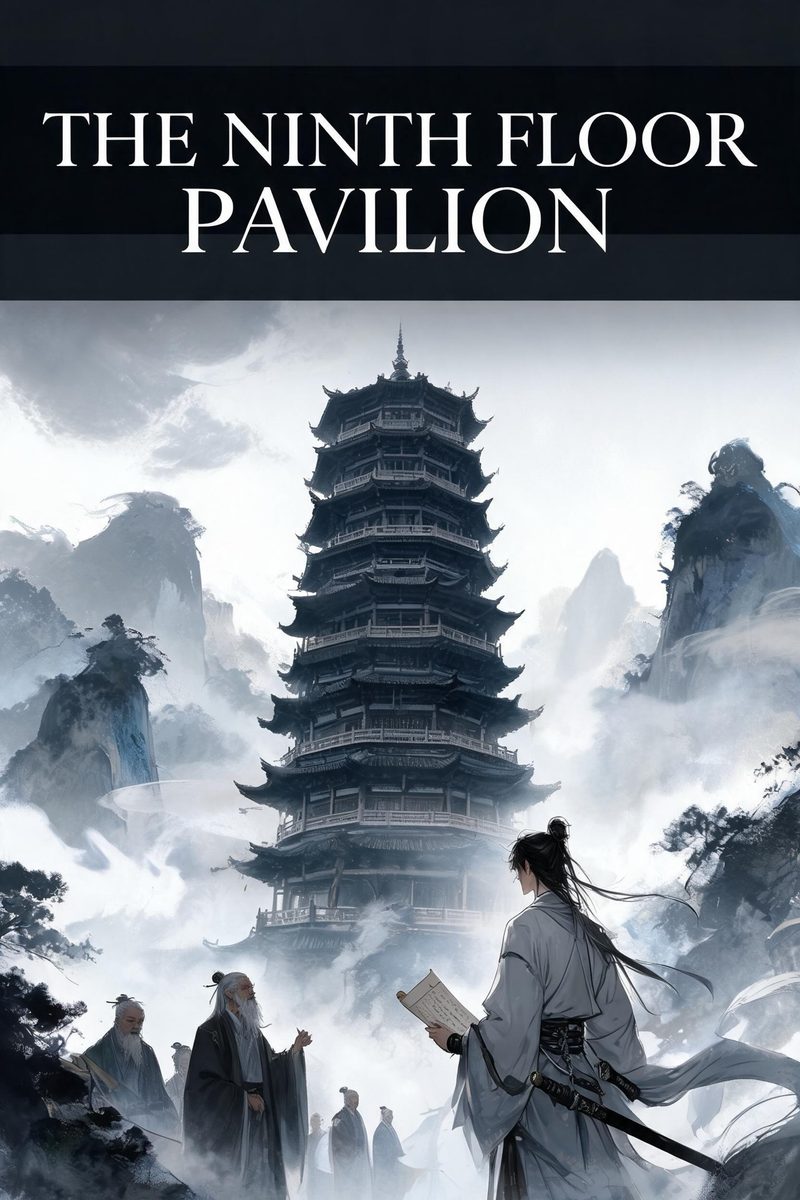
The Listening Rain Pavilion has nine elders, no money, and one rule every soul on the mountain still obeys: never look at the black tower at the center of the compound. Then the heir and the second heir die, and what is left — a twenty-one-year-old menial named Shen Gu, expelled from his own sect for stealing kitchen scraps — is given the chipped seal of master by an elder too old to carry it. That night, one bead of his blood vanishes into the chip in the stone, a lock turns seven floors up, and the tower opens for the one man the mountain never wanted in charge.
The tower pays him. On the first floor: eight pages of the Thirteen Swords of Listening Rain, the lost art that made the sect one of the great powers of the old age, left like wages in the dark. Beneath the pages: a contract written on cured skin. The Pavilion itself stands pledged, stone by stone, floor by floor, and when the ninth floor opens, the creditor will come to collect in person. Interest, one line notes, is not paid in silver.
Shen Gu, who has owned nothing his whole life, learns to move quickly toward anything that might be his. The mountain fights the way it knows. A debt collector's son arrives to inventory the sect down to its breath and keeps its ledgers instead. The cook feeds the county's poorest at the gate until the mob that came to make war is given breakfast. And the tower, listening, begins to bank what the debtor values — including, one ordinary afternoon, the memory Shen Gu has told forty times and cannot afford to lose.
Then the paper arrives. A Consortium factor offers terms that would leave the sect alive in name, paying rent on its own mountain forever. A rival academy opens across the river with a printed fee schedule and glass in the windows, and its master comes to burn the old art down to a curriculum. Granaries burn, a planted flag floats out of the ash, and the whole county ends up in a courtroom where a boy's sword style is put on trial beside a forged deed. Behind all of it stands the true creditor: something buried beneath the tower's first stone six hundred years ago, kept fed in the dark by one family's oath, patient, and nearly done waiting. What that family actually fed it, generation after generation, is worse than silver.
The ninth floor is not a floor. Shen Gu has until the deep places finish their arithmetic to learn what it is, and to decide what a debtor owes when the debt is older than the empire, the creditor cannot be killed, and the only weapon that can cut a question loose from its answer is a deliberately ordinary sword. The last settlement will be read aloud before nine hundred witnesses, every loan renounced by name, every gift accepted by name. And once a year, forever, the plain sword above the master's chair will ask the house the only question that matters:
What is owed?
In our reading guide: This time you're rooting for the dungeon.