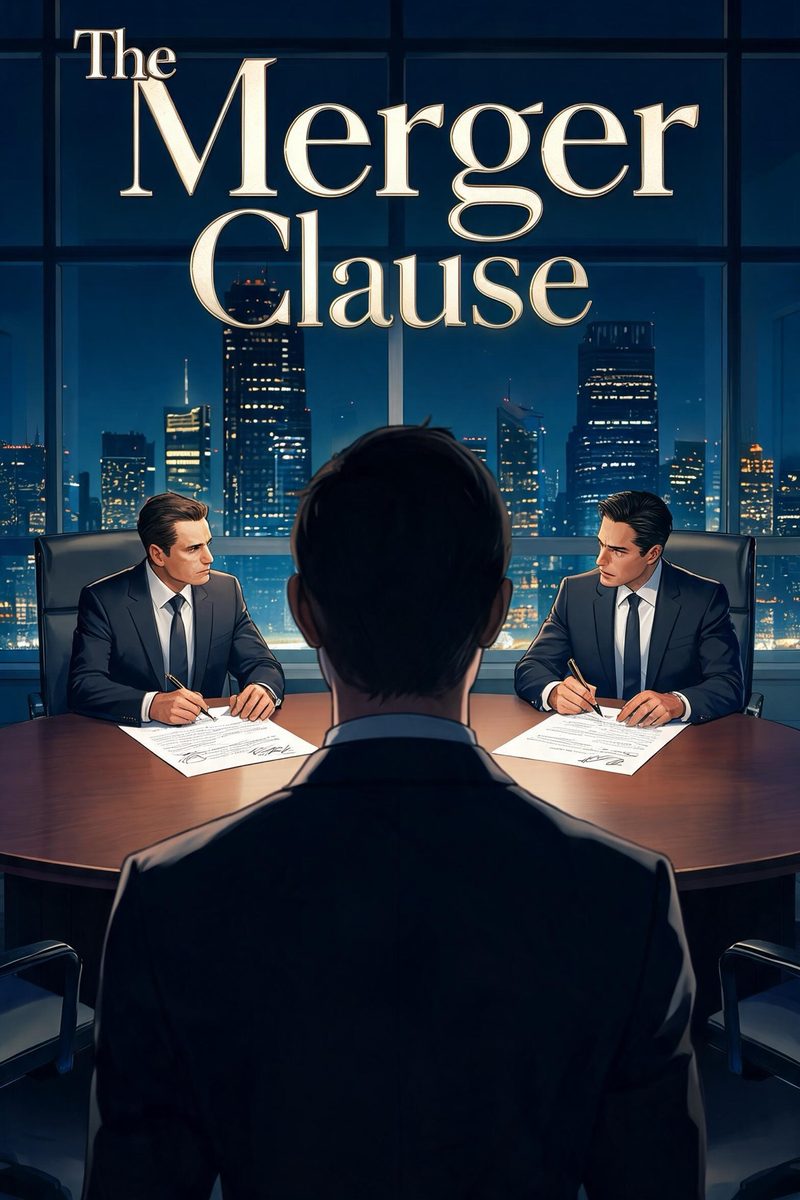
The Merger Clause
by PageCrave Editorial
Gu Xizhou signed his name to a marriage the way he signed everything: with a joke in his mouth and a knife up his sleeve. The heir to a debt-drowned conglomerate, he came home from three years abroad wearing the one mask his family never thought to check — the wastrel. In truth, those years built him a hidden fortune and a sharper set of teeth, and he returns to find his father's empire one signature from extinction: $340 million in debt, salvageable only through a merger with the mighty Shen Group, which will inject $500 million and take a 55 percent stake in the combined company.
Then he reads Clause 9.4.
The merger takes effect only if the Gu heir marries the Shen-designated heir and stays married for twenty-four months. Break it, and the penalty is $200 million and the deal dies. The bride the contract has chosen for him is Shen Zhiwei, the iron chancellor who has run Shen Group since her father's stroke, a woman who traded her own freedom for the chair and refuses to hand it to any cousin. At the engagement banquet, over champagne, they recognize each other across a three-year-old wound: one brilliant memo, fed by unseen hands, destroyed his first great deal in London — and she signed it.
Neither believes in the marriage. Both believe in the clause beneath the clause.
What follows is a courtship conducted like a hostile bid. They negotiate a private annex — separate rooms, no interference, threats disclosed within a day — and then spend their wedding week comparing enemy files. He hunts whoever forced his father to the brink and wrote a bride into a contract. She hunts whoever has steered her family from the shadows for a generation, using her father's silence, her cousin's ambition, and a London law firm that bills like an army and lodges like a burglar. A vulture fund buys their debt by the meter. A sealed schedule sits in the data room, trustee eyes only, waiting to spring. Every instrument of the war points at the same locked door, and the key, increasingly, is each other.
Because the marriage clause has a design flaw its drafter never priced: two hunters chained together keep saving each other. A whispered warning under the applause. A midnight default notice they read while laughing. A pearl earring left in a car, a confession that begins as leverage and ends somewhere neither of them has drafted a clause for. Boardroom by boardroom, forgery by forged signature, the perfect arranged enemies become the only two people in the city who tell each other the truth — while the hidden hand that built their cage discovers, too late, that it handed its two sharpest instruments a common enemy, an unshareable bed's worth of unresolved tension, and one document that can unmake everything: their own.
Whoever moves first loses. They both move anyway.
The Merger Clause is a story of contracts and counterattacks, of empires audited by desire, of power seducing power across a boardroom table — and of two proud people who mistook a marriage for a merger, until the merger taught them the difference.
In our reading guide: Signed, sealed, emotionally unprepared.