The Honest Knock
by PageCrave Editorial
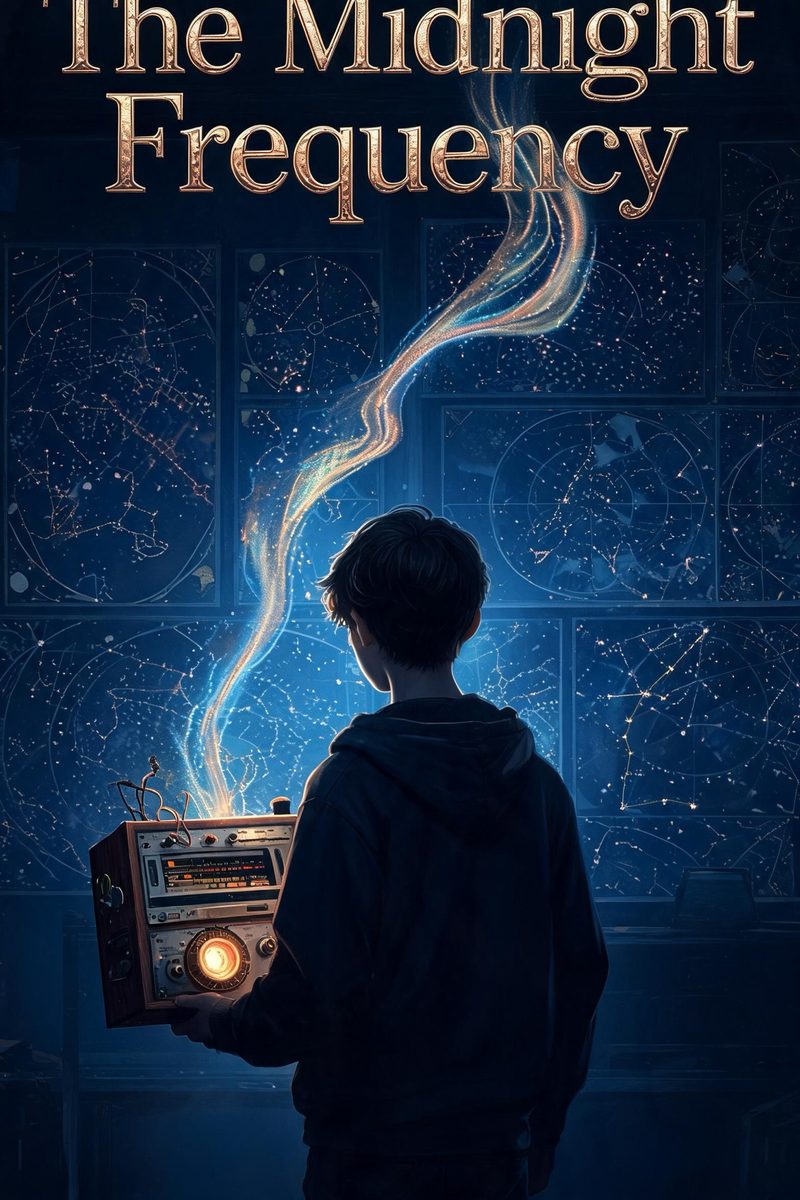
Oz Wilczek hears machines lie. Not metaphorically — through the flat of a screwdriver pressed to a housing, butt to the ear, the way his older brother taught him on a garage floor back when there were two sons in the shop. Growing up above Wilczek & Sons on Gantry Row, he learned that a bearing wears a certain hiss, a gearbox sings a half-step flat before it lets go, and a damaged machine will keep its voice level and hope nobody checks. His father rebuilt other people's ruined machines at a bench in the basement for ten years, left-handed, one gear at a time. Nobody in town asked what the letters chalked over the basement door stood for. Oz never asked either. That was his first mistake, and the book in his father's safe eventually charges him for it.
The winter his senior season arrives, three things happen at once. The Steel Valley Robotics League adopts an electronic judge that measures everything except vibration — which is the one thing Oz's ears were built for. The league's sponsor, a company with a fondness for coins and paperwork, offers his club a fortune to stand down. And the club's junkyard robot, the Mule, turns out to be running on drives pulled from the auction of Perrine Axle — the factory where an accident broke his father's hands, voided his brother's bedroom, and scattered their family into a silence everyone agreed to keep.
Oz files things. It is the family religion: a wrench gets a home, a repair gets a ticket, a story gets a ledger line. When he starts filing what he hears instead of what he is told — a hum in the night basement, a two-note phrase he logs as a question, not a fault, a frequency with a decade of patience in it — the entries stop fitting in any book the school issues. June Brandvold, the sponsor's own daughter, arrives at his booth asking where surplus inventory goes when it is asked to disappear, and they discover they were raised on the same scripture: keep copies, square the paper, never sign a thing you haven't read aloud.
This is a story about a boy who cannot stop hearing the truth and the people who bet he can be paid, promoted, or frightened out of repeating it. It has a junkyard robot with a coffee can for a hand, a diner that runs the block, a soapstone-and-habit dean, and a trophy case with room for exactly one more thing. It has a settlement nineteen pages long and a clawback clause sharp enough to shave with. Most of all it has a sound — one honest knock, ten years old, patient as a held breath — waiting for a room big enough and a crowd stubborn enough to hear it out.
The season ends at the State Championship, on a floor polished like a church, in front of forty thousand people and one man with a coin. The question is not whether Oz's team can build fast enough. It is whether the truth, spoken at shop volume into an unedited microphone, can outlast the people paid to call it noise.
Everything that runs runs honest first. The rest is paperwork.