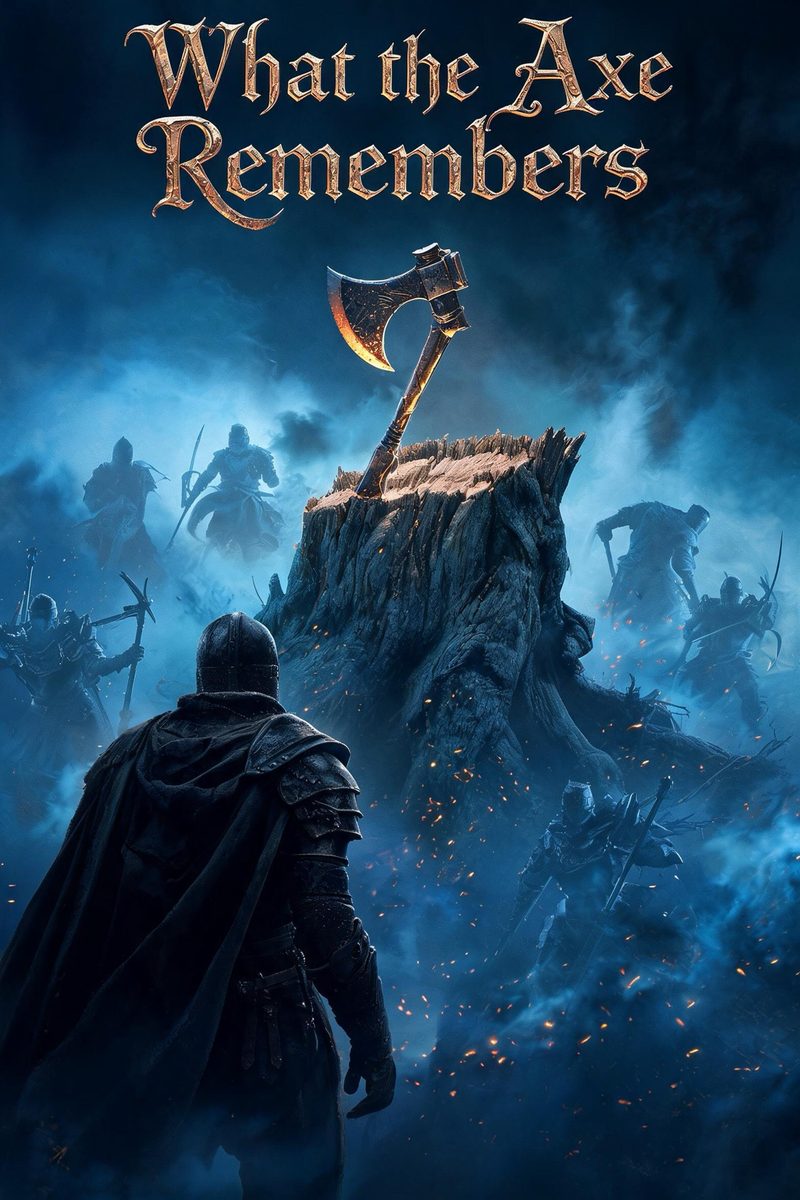
What the Axe Remembers
by PageCrave Editorial
In the city of Wexbridge the law goes all the way up. A man can be tried for theft. A parish can be tried for riot. And a god, if the cause is proven, can be tried for what a god does, and sentenced, and executed, by the only office in the world allowed to swing that particular axe.
Tobiah Cage is the apprentice to the office. His master is the Godsheadsman, keeper of the bronze axe called the Precedent, and when a convicted god lays its neck on the block, the boy counts the stroke down and the master swings. The god dies. The roll gains a name. The city sleeps safe for another season, the way it has slept safe for forty years.
But the axe remembers.
Every execution leaves an echo in the bronze: the god's memory, the god's power, a strand of the god itself. And an echo, drawn carefully, can be borrowed. Tobiah can open a good lock with the courtesy of a dead gate-keeper. He can hold a dying fever exactly still with the patience of a salt goddess. He can taste what is hidden in a wax seal, carry a whisper across a sleeping harbor, sit three hundred angry men down with one struck bell. Each borrow is a tool, and this season the tools have earned their keep. A copy-house has been selling the fever lists to whoever pays. A page in a sworn ledger has been forged in a friend's own hand. A luck-dust trade is running out of a snuffbox, and the dust is not luck, and nobody can say what it is.
Every borrow also has a price, and the price is this: each time Tobiah draws on a dead god, that god lives one night nearer to waking. Seven draws, and the god wakes in him and wears him. He knows the count. He keeps the count. He has sworn an apprentice's oath to stop counting at six, and so far he has kept that too.
Then his master vanishes, three days before the season's Reckoning, leaving behind a forty-year-old writ sealed in fresh wax: a writ of execution against a god whose name has been cut out of every record in Wexbridge. The bench's own rule says no stroke can fall until the god is named. The writ's own terms say the name can be read by one mouth in the world only, at the scaffold, at the hour. And the echoes in the bronze, the dead gods Tobiah carries in the metal, have all turned in their sleep to face a door that no writ has ever been served on, and begun, one by one, to bow.
To see the season out, Tobiah will have to out-argue the coldest auditor the House has ever seated, count a good bailiff honestly, keep one warm lie warm, and hold to the terms his master left him: whet the bronze with rainwater, read the writ with your own mouth, and do not open the flat mark at the foot of the axe until after the stroke falls.
A dark fantasy of courtrooms, contracts, and quiet gods. Forty-two chapters, complete.
In our reading guide: This time you're rooting for the dungeon.