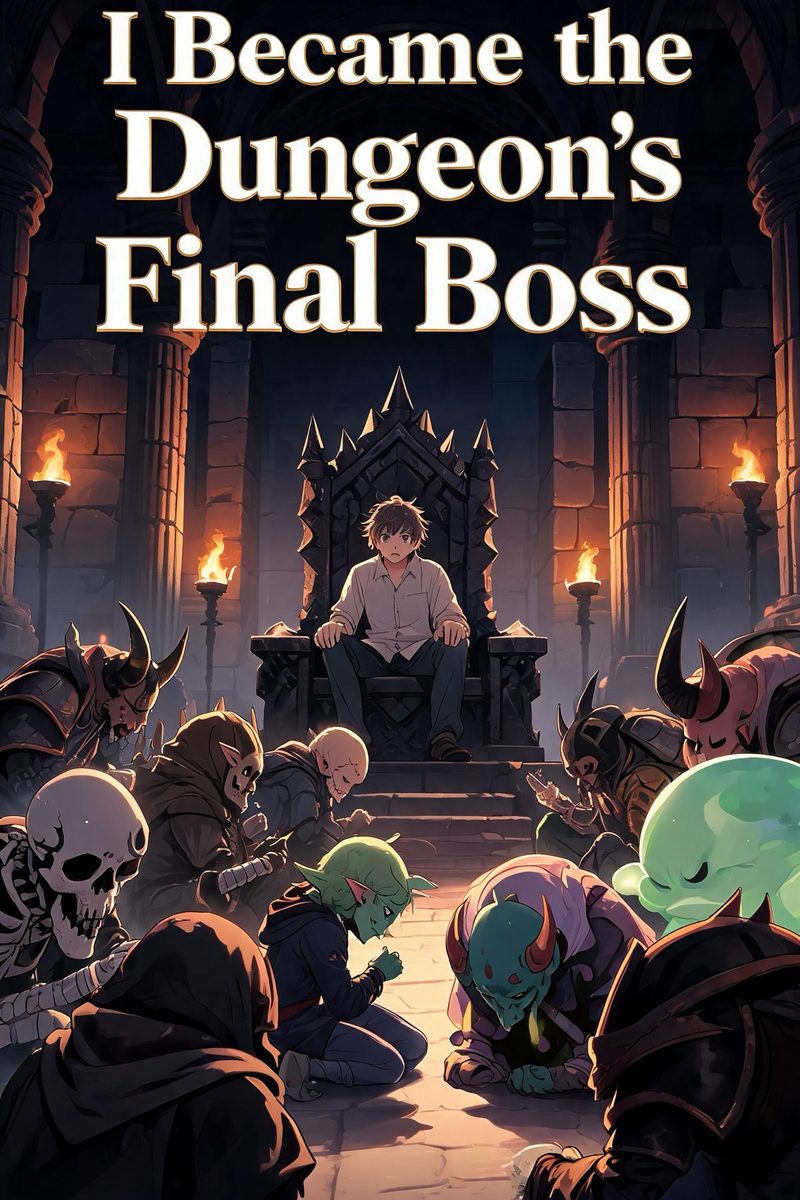
I Became the Dungeon's Final Boss
by PageCrave Editorial
The forum thread called him the cleanest fighter in Corvale: six raids, six clears, no guild flag, no party, no past. Hunter rank one. Nine years in the gates. A man named Silas Vane who soloed what whole guilds filed insurance against.
What the forums never worked out was the second job.
Two years ago, Silas's younger brother walked into an A-rank dungeon called Ashen Church with a raid party of nine, and the city wrote them off as a wipe. The Bureau closed the file. The guilds closed the subscriptions. Silas did not close anything. He spent two years pulling at the church's locked floors, until the night something in a dead gate offered him employment: a contract to serve as the dungeon's hired final boss — a mask, a throne, a salary in untraceable grey tokens, and access to the only records the Bureau could never subpoena.
So he signed. By day, Silas Vane climbs the hunter ladder and hunts the dungeons. By night, masked and magnificent, he IS the dungeon — the final boss that raid parties pay by the tier to face. The contract's first clause runs his life: the two identities must never be witnessed in the same frame. Sixty minutes after one credible witness or one standing recording links them, the contract forecloses — every tier confiscated, and the floors turned to hunt the man who wore them.
Then there is Mara Thorne.
Hunter rank two. She raids his church by night and spars with him every Tuesday by day, and she keeps surviving fights no one survives — because the boss keeps sparing her, and rank two keeps receipts. Cape pin, pauldron strap, cut buckle: three spared kills, filed like evidence, building toward a question she finally asks with a blade at his throat and neither of them stepping back. She wants the footwork explained. She wants the flinch explained. And the closer she gets to the truth, the more the truth starts to feel like the least dangerous thing between them.
Because the floors have secrets of their own. Beneath the altar is a corridor of glass cells where the dungeon keeps its candidates: living hunters the city lists as dead, brass-collared, their voices harvested for the choir. The hunters' final bosses — every monster rank one has ever been paid to put down — were people first. And on the darkest floor of all, in a cell with the blanket still warm, is a transfer chit with his brother's collar number on it.
The Man in the Screen — the never-seen employer whose voice comes out of ticket booths and televisions — has been promoting Silas up a ladder of nine tiers, one leash at a time: doors, floods, speakers, miracles, each reward a longer rope. The top of the ladder holds the contract's only unwritten door: stand unmasked in public while both identities share one frame, and outlive the hour that follows.
Eight days before New Year's Eve, the Screen schedules a completion ceremony at the Bureau's Lantern Gala — sixty broadcast minutes, a thousand witnesses, and every screen in the building wearing Silas's own harvested face.
To save his brother, the hunter has to unmask the boss. To keep his name, the boss has to survive the hunt.
Sixty minutes. Two identities. One body. And the whole city holding the camera.
In our reading guide: This time you're rooting for the dungeon.