Space in the Seventies
by PageCrave Editorial
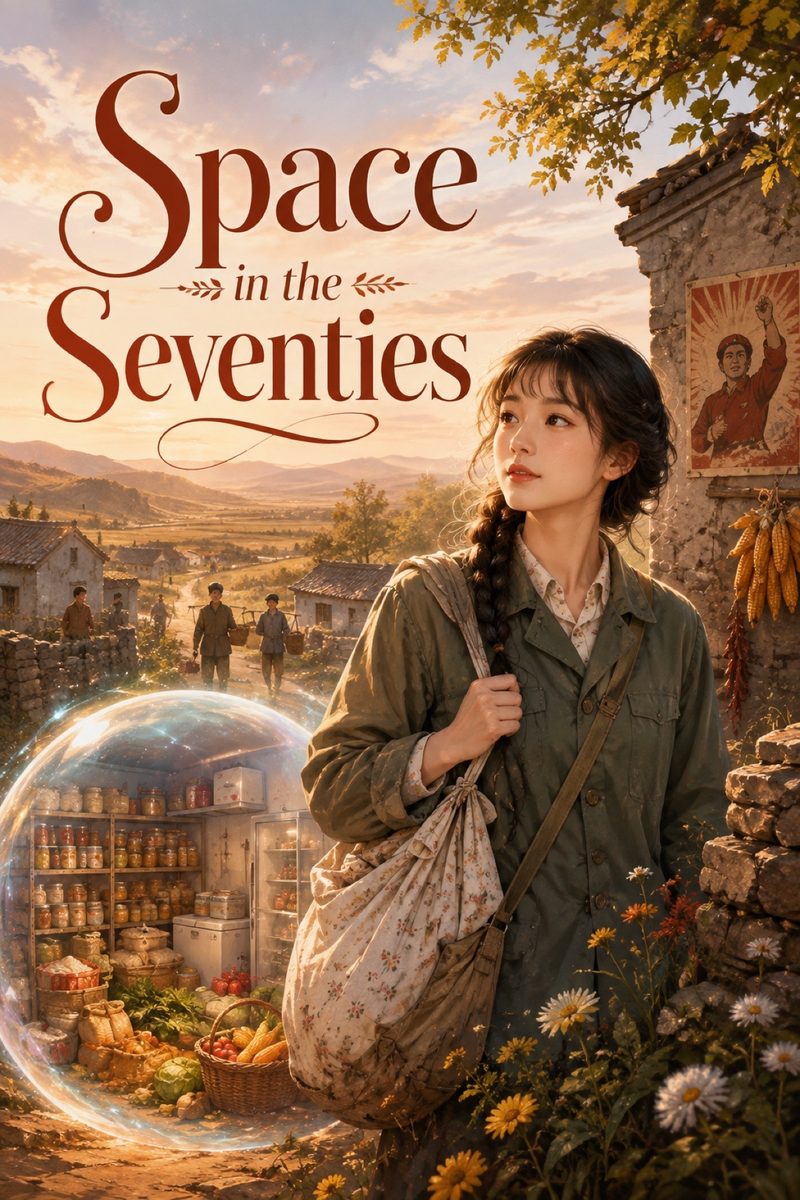
Huang Jiaojiao has read enough end-of-the-world novels to know the rules: a space appears, and the sensible begin to hoard. So when a peach-petal birthmark blooms on her wrist and opens a pocket of nowhere — ten square metres where time stands still, where nothing grows and nothing lives, and whatever goes in comes out exactly as it went in — she does everything by the book. She sells her flat, drains her accounts, and spends a breathless month hauling grain, oil, medicine, quilts and winter coats into that quiet standing stillness, laying in against every hunger she can imagine.
The apocalypse never comes. A plane crash does.
She wakes in 1970, in a Shanghai lane, inside the life of another Huang Jiaojiao — a silent, stubborn girl days away from being sent down to a poor village at the edge of the frozen northeast. The girl leaves her almost nothing: a big family stretched between wages and ration coupons, a winter that eats coal the way hunger eats grain, and a future narrow as a grain sack. But the space crossed over with her, packed to the roof beams, and so did a grown woman's memory of which way the decades will break.
The seventies, she discovers, run on rules her old world only told stories about. Grain is worth more than money and must never see daylight. A chicken is a festival; a coupon is a chain of command. Kindness is remembered, suspicion is ruinous, and the line between a favour and a crime is one busybody with a window. So she trades softly and keeps her head down, and where her neighbours see shortage stacked on shortage, she sees shelf after shelf of patience ready to pay out.
The wish-fulfilment is real, and she does not apologise for it. Her family tastes white flour while the lane counts cornmeal. Black-market traders decide she has channels and come knocking. The village that took her for a soft-handed outsider watches farm tools arrive as if out of thin air, then a schoolhouse, then letters that open doors in town. Step by step she becomes the person Lihua Village did not know it needed — while behind the sky, ten square metres of another world keep their stillness for winters no one can foresee.
And then there is Gu Tianxin: a steady, laconic young man from the next village, whose mother sends a matchmaker, and who looks at her as if he already suspects she is more than she appears. What starts as arithmetic — a matchmaker's ledger of conditions and prospects — turns into something that makes her pulse tick like a borrowed clock. He pedals her home on the carrier of his bicycle, her basket resting between them. Letters begin to travel, and grow warmer with every stamp. A coat arrives on her shoulders without being asked. She keeps the door of her secret shut; every other door is another matter, and when the snow drifts deep, this story steps inside with them and lets the lamp burn low.
For everyone who ever wanted a hoarder's heaven to land in the harshest decade of the last century: warm kang, hot soup, slow burn, and a ten-square-metre miracle rationed out one quiet mercy at a time.
In our reading guide: This time you're rooting for the dungeon.