The Man Who Pinned the Doors
by PageCrave Editorial
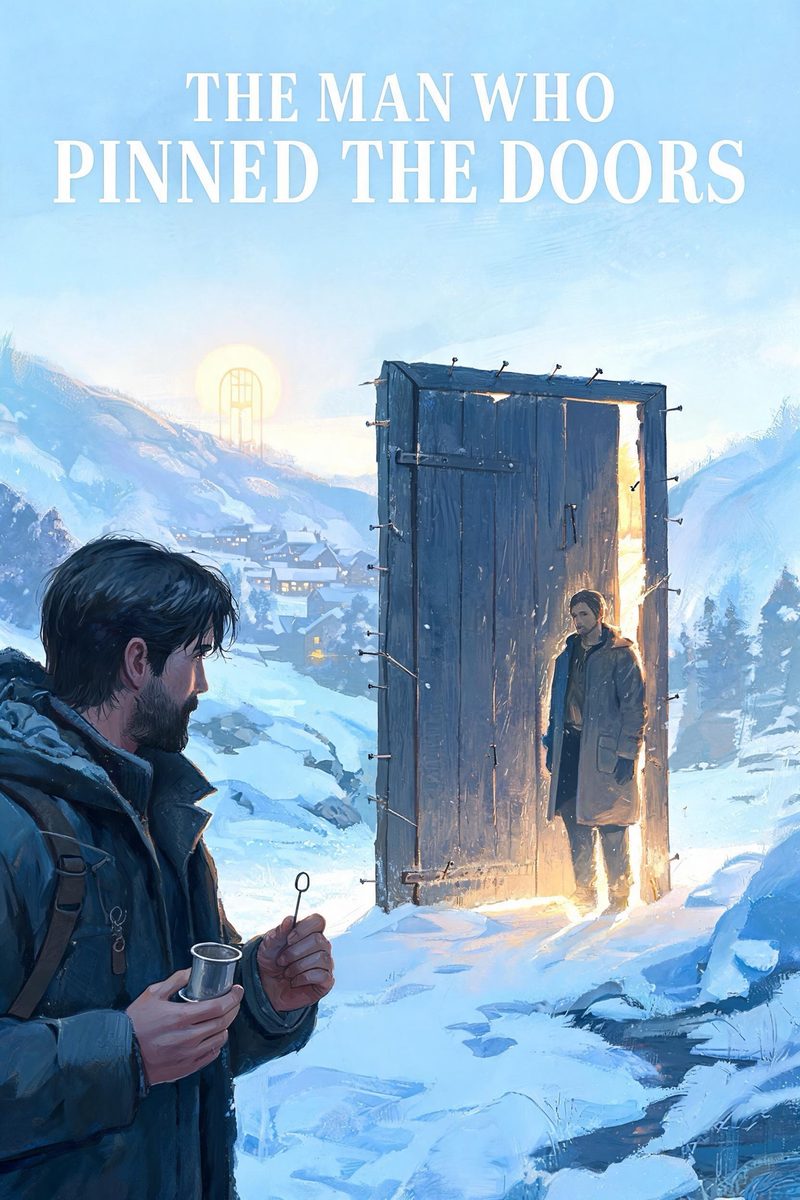
On the Merrow Breaks, the doors between the world and the elsewhere stand loose like wells gone bad, and the Charter's pin-men nail them standing and pay the only way a door accepts: one thing of yours, kept and used behind the shine. Wick Brander, nineteen, has the family gift and the family debts. He hears doors with his back teeth, and his first solo pin goes perfectly until the door ignores his honest pack of junk and takes his mother's thimble instead — a debt he named in his heart nine years ago and never said out loud.
Nine years before that, his father rode out alone to hold the Winter Herd, the largest loose door on any register, and never came back. The town calls it sacrifice. The ledger calls it a fee paid in keeper. Wick has made his peace with both stories, right up until the Herd's pin begins to grey, the beds start to whisper, and he walks into the Herd's snow-country and finds something wearing his father's coat, whistling his father's three-bar waltz, minding the woodpile of a winter that has been waiting for somebody to count it.
The Charter has one answer: set a second pin, keep the Herd behind fences, and the yard's sixty-pins-a-year arithmetic keeps balancing. The Open Hand preachers have the other: every door is a wound, and what you nail, you owe. Wick, his ledger-keeper mentor Cass Lowe, the assayer Corven Gault, and a heretic preacher named Sallow Reed — whose shadow arrives everywhere a little after he does, for reasons he has never said out loud — are about to find out that both answers are wrong, and that the founders who built the Breaks left a third one under Sweetwater's cellar floor, in their own hand, with an apology on it.
Because the founders' secret is this: the sun over the Breaks is a door. The whole county has lived four hundred years inside the First Holding, loving its gold evenings without once being told what it was kissing, and the old iron under the town is tired now, cracked, and asking — the way every door on the range asks — for a keeper who will hold the iron and mean it.
So Wick rewrites the trade rule by rule. Name your pack honest, and pay what a door asks, and when a door asks for company, answer it before it asks twice. The price is the truest thing he owns, said out loud, on his knees, before witnesses. The payment comes back stranger than any fee: a father who walks out of the winter and then chooses, freely, to walk back in as its warden; a preacher who pays a thirty-year debt by naming his dead; a town that hears the truth of its own sky and does not run.
And when the fighting is done, the new trade keeps one custom the old trade would have called madness: one door on the range stands open on purpose — lamped, warded, watched, and paid honest wages — because a roof with the door left ajar was the founders' whole errand. The book ends on a wool-buyer's child at a fencepost, humming, note for note, a tune she was never taught. Well heard, little one. Come on, then. It's time somebody taught you the words.
In our reading guide: This time you're rooting for the dungeon.