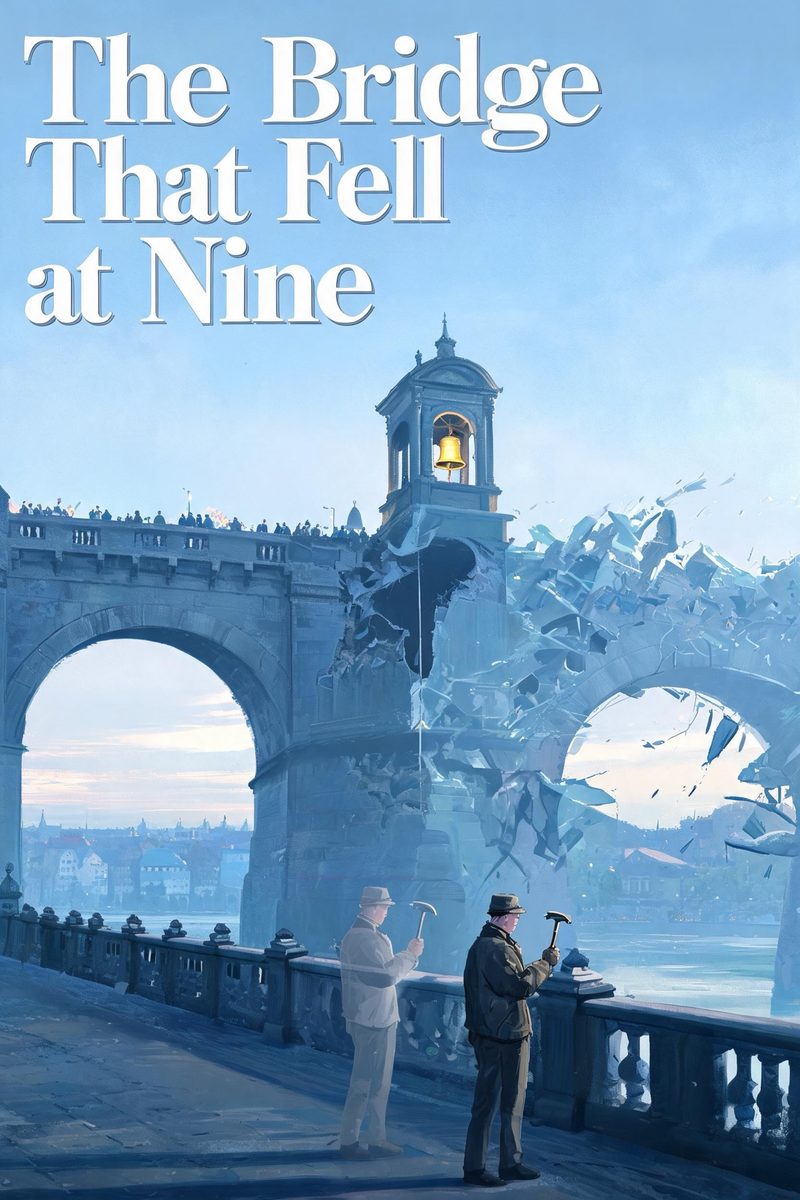
The Bridge That Fell at Nine
by PageCrave Editorial
The bridge Ivo Marsh died on was the one he had red-flagged four months earlier. He filed the warning. The county overruled the warning. He stayed on the span anyway, counting heads off it, sixty-one saved and the sixty-second not, because a man cannot count and be counted from the same side of the ledger.
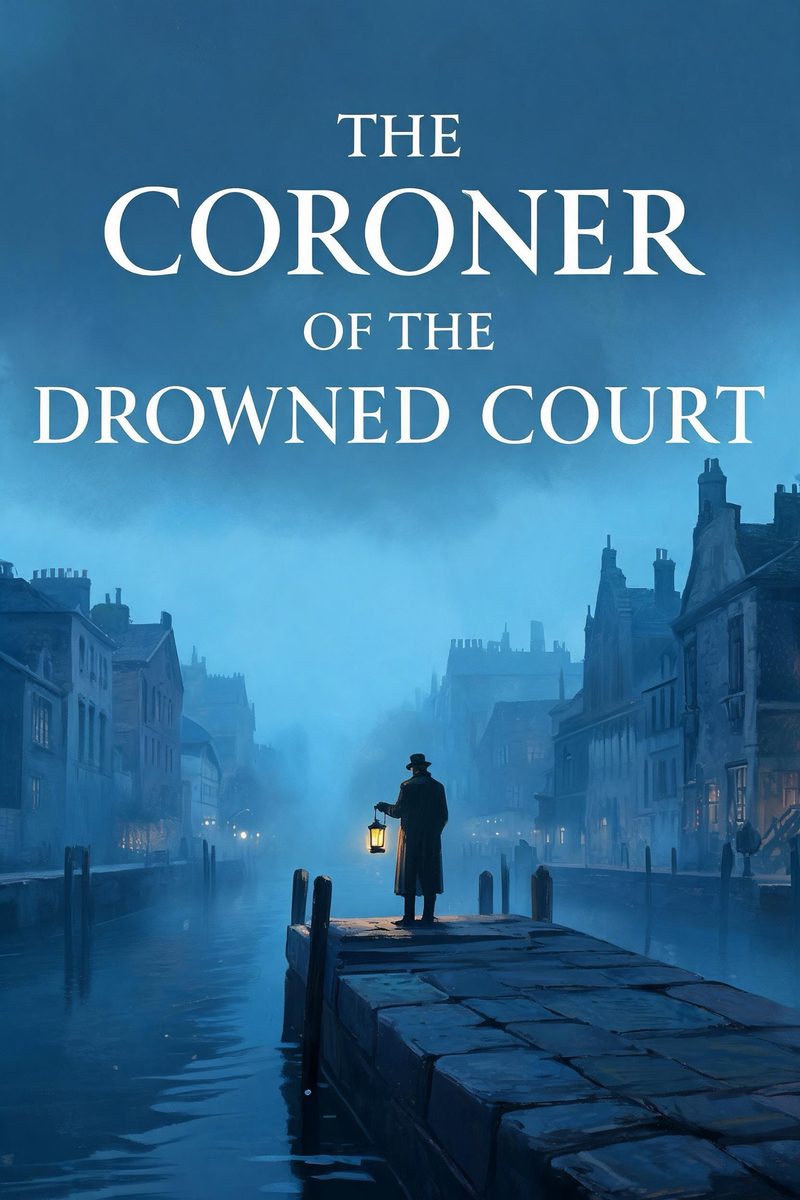
He woke under a different bridge, in a different world, on the greatest morning of a festival city's year. Carreford's founders built the Waingate three hundred years ago, a living span of founder-age stone that answers a sounding hammer like something alive: true for sound stone, hollow for sick stone. And at nine o'clock by the great clock, with the whole town on the deck for the Lamplit Fair, the Waingate fell, and Ivo Marsh died under it with a crowd in his arms.
He woke on the same bank, at the same dawn, under an unbroken bridge. The same loaf with the same split crust. The same broken fiddle string. The same joke from the same milkman. The Waingate is living out the last day of its life over and over, dawn to nine bells, and the only thing it carries across the night is the memory of a dead bridge inspector.
But the dawns are coming earlier. Three minutes, then four, then five. The bridge is buying its sunrises out of its own memory, and the memory is running out, and the tally says there are six mornings left.
So the man who was overruled once does what a bridge man does: he sound-tests the loop. He learns which pier is silent because its founder heart has been chiseled out and sold to pilgrims in slices. He learns whose boats carry the stones away at slack water, whose signature buys the tar that burns the rescue braces, whose insurance house has collected in full on three bridges and a mill weir before this one. He learns that the fall at nine is not a fate. It is a hand, with a pen.
And he learns, in a sealed press under the toll desk, what the fall actually is: a contract, three hundred years unfulfilled. The Waingate holds while three clauses are kept. The tithe of the span, paid full at each year's end. A petition in the Warden's own lawful hand. And the Ninth Bell, unrung since the founders, rung by a keeper's hand, before the town. Every day the clauses could be completed before nine. Every day nobody does.
Now he has six mornings to recruit a toll-clerk who keeps the only honest tallies in Carreford, a girl who has practiced the changes on the dead bell for nine years, and a Warden whose seal is genuine and whose hand is owned, four hundred marks deep, by the man who insured the fall.
The budget men won. They won at Millbrook, and they are winning here, with writs and credit lines and a festival's worth of paper.
But a bridge is a promise, and promises repeat.
And this one has a keeper now.