Terms of the Flame Bride
by PageCrave Editorial
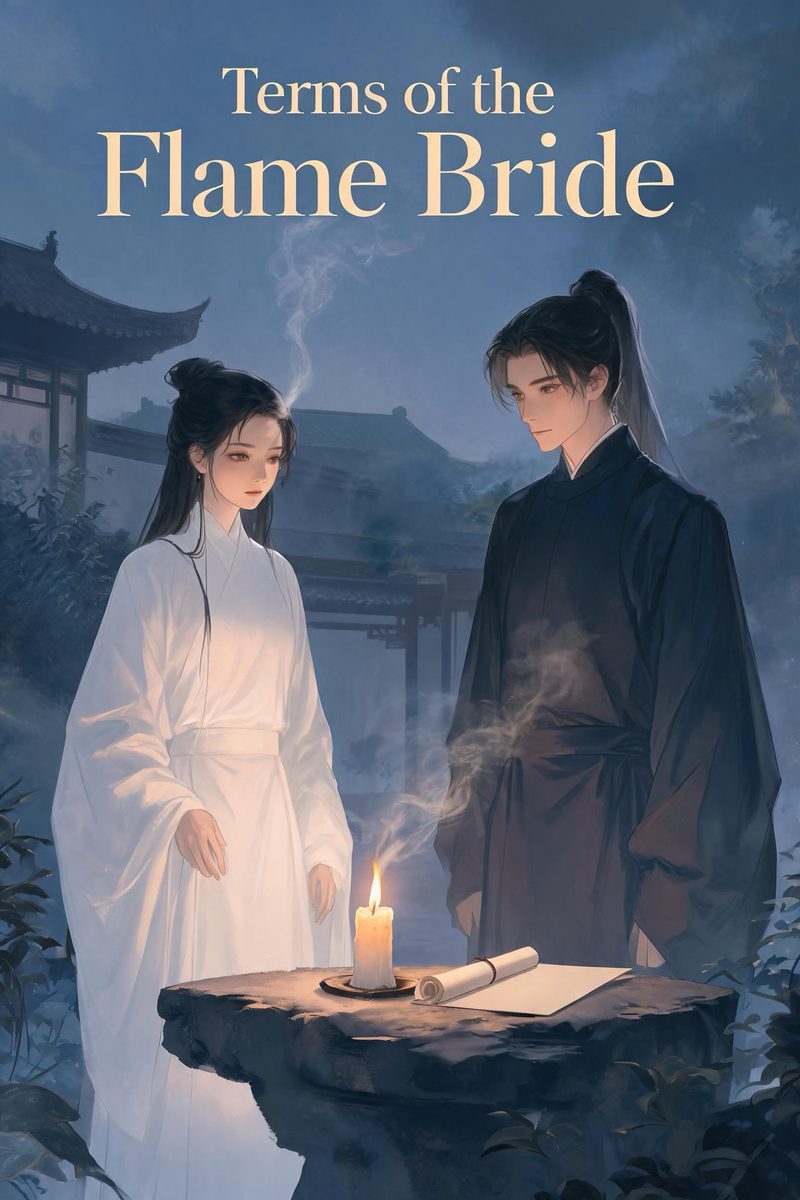
To clear her sister's debt, Lin Meiying sells one year of warmth to the Gu household as a flame-bride.
The Gu heir is cursed to forget the faces of those he loves. Her living heat is the anchor that holds his memory in place. The terms are simple, and therefore cruel: one year, white thread in her hem, no mirrors after dark, incense counted out in sticks, and a blank seventh clause that no one in the household will explain. On the wedding night under ash candles, Gu Yan cannot hold her face past the threshold. He writes "bride" on his palm in charcoal because her legal name is not yet his to say.
Each night, the curse takes something from her first—taste, then smell, then the sound of her own name—so that his forgetting has somewhere else to go. Rice becomes water. Rain loses its smell. Echoes of "Meiying" go quiet on the courtyard stones, and she writes her name on her sleeve so the world can say it back to her. In exchange, the household clears a debt that would otherwise have owned her sister Meizhi forever.
Meiying did not come to be loved. She came to be paid.
But the heir starts writing her name nightly in charcoal, then speaks her true childhood name once too early and accepts the rite's reset without flinching. Aunt Zhao, the ritual keeper who never uses her black wood comb, begins teaching counter-rites in the ink pantry—because Zhao was also a flame, and the house kept the heat. Madam Gu Rulan counts the household heads at dinner and always seems to count one extra, and the previous flame-bride's sealed room holds a wall written in ash: HE DOES NOT FORGET. HE IS MADE TO FORGET.
Orange peel triggers the worst forgetting days. A rival house gifts crates of it, and Meiying smashes fruit the way a general breaks a siege. The ancestral hall's ledger lists brides for forty years, struck through, remitted to hall, with no release dates. Clause seven, Meizhi will later prove with legal pencil, was never empty by accident. It was a coward's refusal to write the obvious: the bride is not property.
To keep the year, Meiying will have to fill that clause, light the wedding candle for reasons no contract can invoice, and discover that her grandmother was the unpaid counter-signature the matriarch stole—then decide whether she is still a payment or finally a person who chooses.
A historical contract romance of incense rites, charcoal names, orange peel luck, and the difference between a price and a promise.One year under fire law. One bride whose warmth keeps a face from fading. One blank seventh clause that the household is afraid to fill.
If you like historical contract romance with ritual detail, a cursed heir who learns love by description, a heroine who refuses to be paid for in someone else's safety, and a matriarch who counts one extra head at every dinner, light the candle. Count the incense. Do not look in the mirror after dark.
In our reading guide: The terms were clear. Nobody followed them.