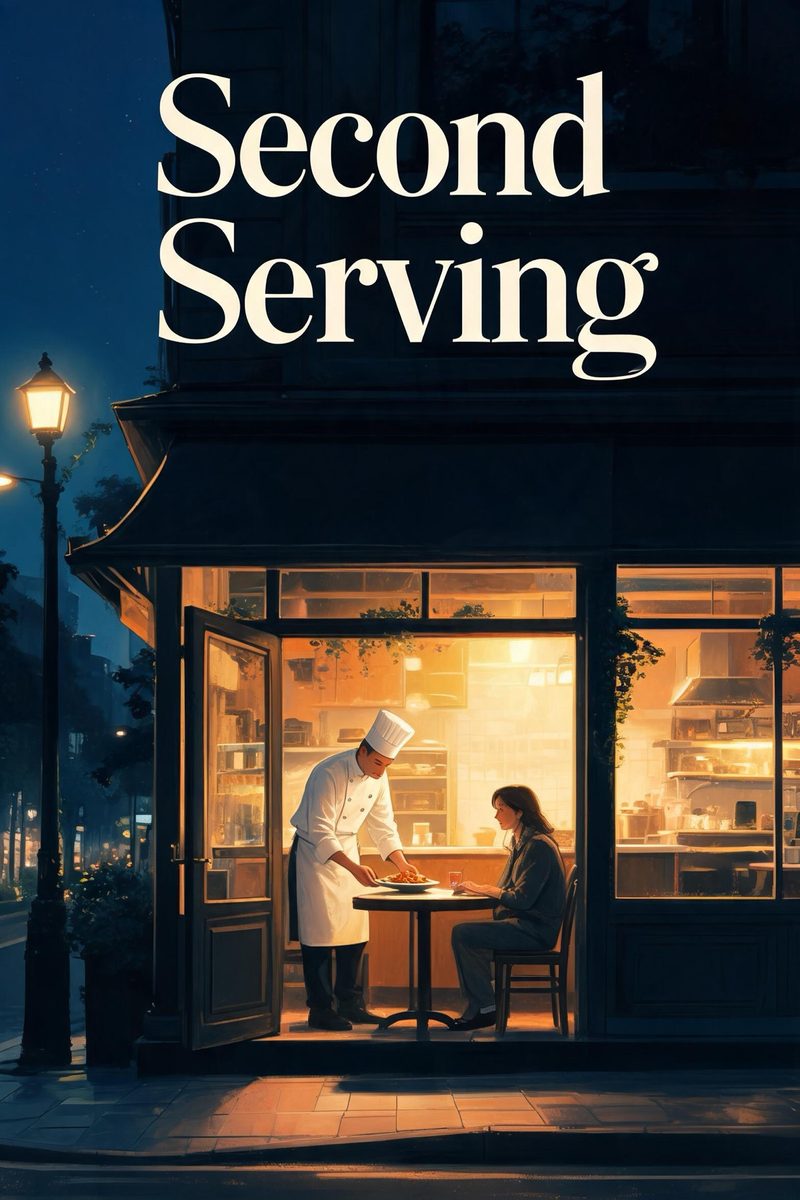
The Inheritance Clause
by PageCrave Editorial
Nora Beckett resigned as CEO of her own pastry chain on a Monday, and by Thursday she had inherited a building she never wanted from a grandmother she never understood. Colette Vasseur, the street's most famous matchmaker, three times widowed and trusted with everyone else's marriages, left 27 Quince Street to the two grandchildren who had never once shared a room voluntarily: Nora, who counts like her father and is right like her grandmother, and Elias Sartori, a fine-dining chef whose two-hundred-seat restaurant had just collapsed in fourteen months flat.
The will is one page of insults and one clause of dynamite. Twelve months. One shared signboard stretched across her pastry counter and his stove, a party-wall door between the two of them, and positive operating income by the deadline, certified by an executor who golfs with Nora's worst enemy. If either heir quits, the building passes to the institution the other one hates most. For Elias that is Blue Sparrow Kitchens, the national chain that keeps renewing its offer to buy his name. For Nora it is Callas Development Group, the buyers who have been assembling the block one storefront at a time. A resignation is a gift to the enemy, and neither of them intends to give one.
Then they discover what the matchmaker actually built. When Nora and Elias quarrel, the kitchens run hot. Arguments about salt become specials; feuds about pricing become lines around the block. A fight between them produces more, and better, than either produced alone, and the whole street can tell. The shop they christen Odd & Even becomes the address people bring things to: a forgotten recipe, a debt, a rumor about a fire. The cost sits in the paperwork, because with Nora everything does. Revenue split to the decimal. Joint liability, shared blame, shared losses, no solo exits. And the hot hand needs both of them in earshot. It cannot rescue a bad dish. It cannot survive a silence.
Because the will is not the only document in the building. Upstairs, behind a brass plate, the matchmaker's office turns out to be an index, and the index says what nobody wants said. The appendix of the will was swapped, and the real Second Schedule holds a trust and a truth clause, both dated the June before she died, both pointing at the night of November 14, 1995, when the Copper Kettle burned and an innocent cook took the blame for a fire that somebody paid to close cleanly. Nora reads ledgers the way other people read confessions. Elias grew up on the wrong end of that rumor. The deeper the two of them dig, the less the clause looks like a punishment and the more it looks like a matchmaker's last introduction, because Colette Vasseur never introduced two people by accident, and she had watched these two meet four times before they noticed.
An enemies-to-lovers romance for grown-ups, written to kisses and closed kitchen doors: a pastry CEO with a brass tally counter, a chef with a father's name to clear, two storefronts under one roof, and an inheritance that only pays if they both stay. One year. One sign. One fire that should never have closed as wiring. Two people learning that the fastest way to ruin each other is to start needing each other.
In our reading guide: The terms were clear. Nobody followed them.