The Midnight Roll Call
by PageCrave Editorial
Every army keeps a muster. On the Vorsa Line, the muster keeps them back.
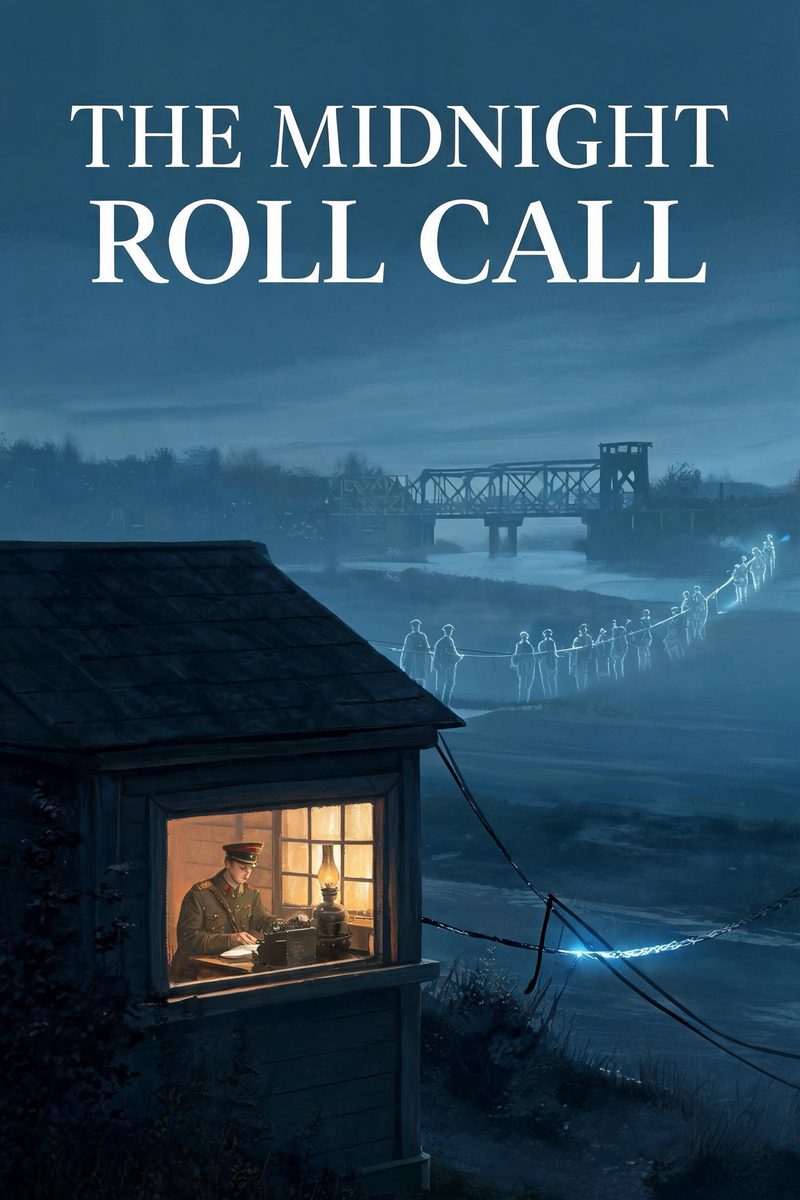
The long field wire that crosses the Brassa flats was strung by the 9th Sappers, two hundred and fourteen men who died to a man holding a pontoon bridge so that an army could escape across it. Their roll call was never answered. Nobody said the word. And ever since, at midnight, an old telegraph operator's fist comes down that wire, patient as water, calling names — and by morning, every name it calls is dead.
Darev Lun is nineteen, a battalion clerk with two slow fingers, a service number, and a mother who spells his name with two r's. On his first night in the signals shed he transcribes the midnight roll out of sheer clerical reflex, and at noon the next day the last name on his page is killed by a mine at the canal lock, exactly as typed. That is when he notices the first letter missing from his own paybook.
Because the roll has a price, and the price is the clerk.
Trading deaths is possible — who dies can be moved, bargained, typed onto an empty duty roster a mile from anywhere — but how many die is fixed, fixed as a court finding, and the wire collects its fee from the one man who writes it down, a letter at a time, out of his name, his records, and the memories of the people who love him. Darev learns the arithmetic fast, because clerks do: a trade costs a letter, a night of listening costs a fraction, and the previous clerk spent his whole name in six weeks and now walks the wire field as a man the dogs will not bark at.
Then the war notices him twice.
Captain Raal of division intelligence arrives with a red file of nineteen coincidences, a talent for handwriting, and one creed: miracles belong to the ledger of the state. Across the river, an Argath countersignal officer called the Listener — who keeps a tuning fork, sends gifts before attacks, and has his own brother on his own side's roll of the dead — works out what the wire is and where its throat is. Soon both armies know the front's haunted wire calls a muster of two hundred and fourteen men who were never counted, and that the muster cannot be starved, forged, or shot. It can only be answered.
To close it, someone must stand at the Breach and send present down the wire for all two hundred and fourteen — a price no living name can pay. Unless the state itself pays: two hundred and fourteen names, entered at last into the roll of honor in the army's own ink, read back out loud as answers while a retreat drowns on the same bridge where the debt began.
A military fantasy about paperwork and hauntings, where every telegram has a tariff, every name is currency, and the only thing the dead ever wanted was the one thing armies never say: all present, all accounted for.
Read on, and mind the midnight wire. It always takes attendance — the only question is who answers.