Life as the Villain's Stepmother
by PageCrave Editorial
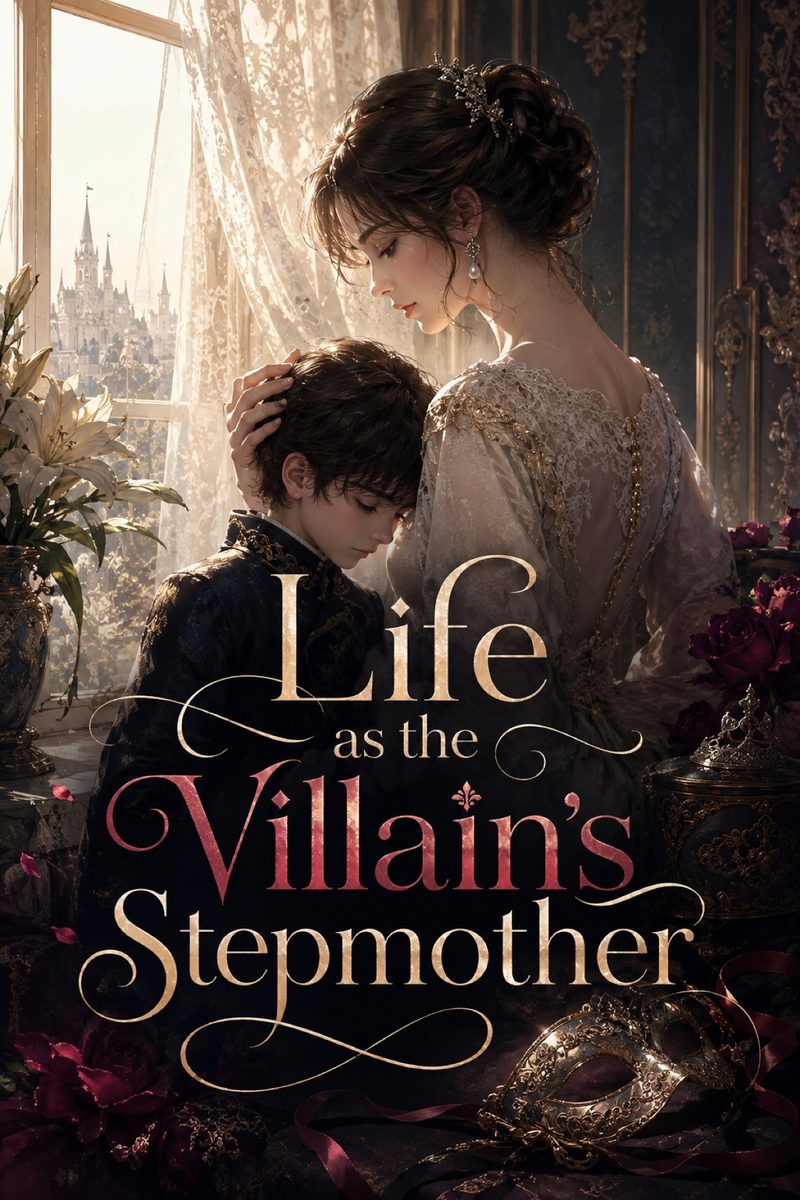
Everyone knows how Mrs. Willy's story goes. Julia Willy, the commoner beauty who married a viscount, buried him, and turned her cruelty loose on his small son — the mistreated boy the novel fated to survive, seize an empire, and destroy her. Our heroine knows the book by heart. She has reread the stepmother's worst chapters so often she can recite them, and she has said, aloud, to no one: if I were Julia, that boy would never have spent one unloved day in that house.
Then her oven explodes, and she dies in a cloud of burning madeleines.
She wakes in silk sheets, to a maid calling her Mrs. Willy. Same face in the mirror, down to the amethyst eyes. She has transmigrated straight into the villainess — the body of the woman she spent her last life despising, trapped in a plot with one ending already written for her.
She refuses the ending.
The first thing she does is throw open the door they locked the boy behind. She feeds him. She learns what he likes, bakes it herself, and watches a child who ate standing up, in case sitting were a luxury, learn to take up space again. Piece by piece she takes apart the cruelty of the woman she used to be — and the household notices, because the whole estate was built on that cruelty and ran on it for years.
The late viscount's mother, Countess Sandha, wants the mansion, the jewels, and the lowborn widow gone, and she has spent a lifetime making problems disappear. What she cannot account for is a Julia who has read the story: who knows where the will is hidden, which smiles are knives, and exactly which rumors about the Duke are lies.
The Duke is Roy Wipere — black-haired, black-eyed, half legend and half threat, the man the court calls a demon behind closed doors. Everyone wants something from him. Julia walks into his study and offers him a contract no one saw coming, one that leaves even him, a man who predicts everything, turning her terms over in his mind for days. What begins as paper and advantage turns into something else: chess games that neither of them wants to end, a hand that lingers half a second past proper, a voice at her ear that has no business being that warm. The tension between them builds to the edge of the unimaginable — and then the lamps are blown out, and the morning after is sweeter for everything it left unsaid.
But affection does not mend the plot on its own. The Countess is still hunting the will that would strip her of everything. A black diamond mine is quietly poisoning the family that bought it. Somewhere in the dark, a power that eats other powers is looking for a user. And beneath it all sits the original story, patient as a pen over paper, waiting to write the boy's revenge with or without her consent.
A warm, sharp-tongued tale of second chances: a villainess determined to be innocent of her own crime, a little boy learning that mothers do not slam doors, and a dangerous Duke discovering that the most terrifying thing about his borrowed bride is how carefully she loves.
In our reading guide: The terms were clear. Nobody followed them.