The Last Banner of York
by PageCrave Editorial
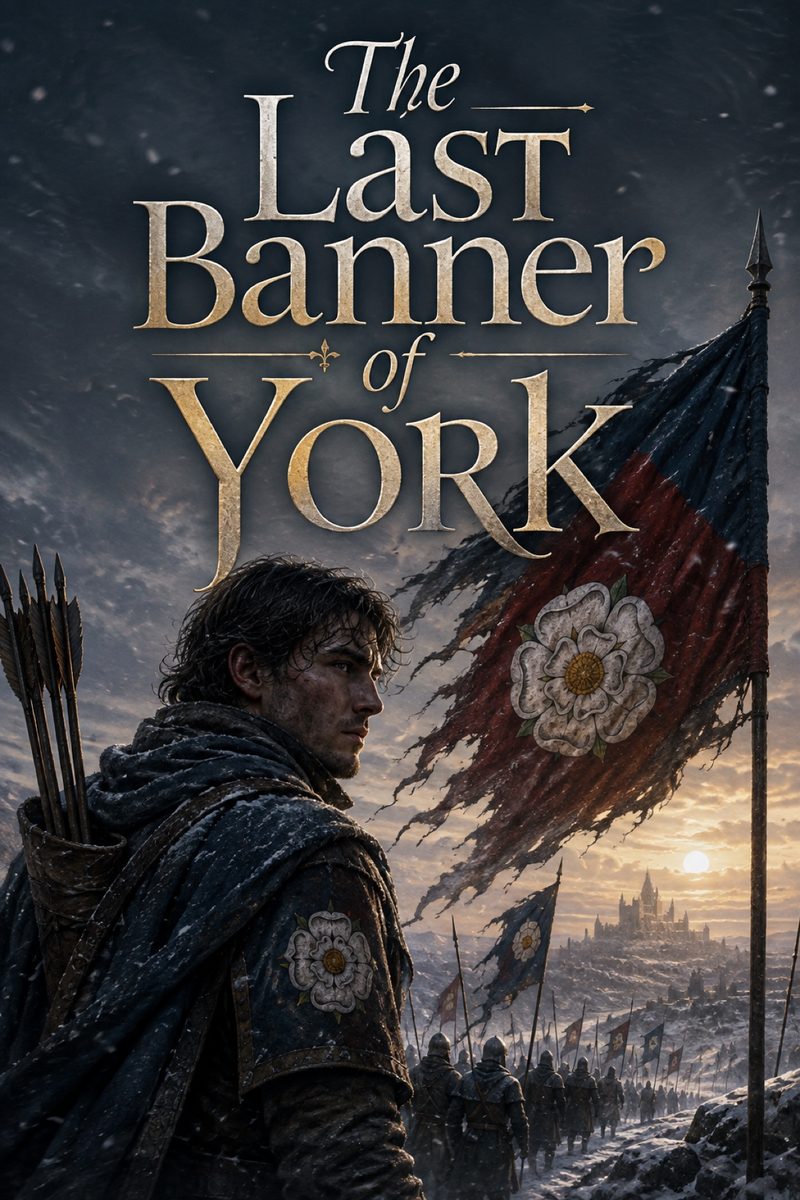
The winter the realm sat without a crown, Edmund of York learned that his company was already dead on paper. The pay-chest held six silver pieces and a twist of copper. The morning count promised forty-one archers who could still draw, and the count was a lie someone was paid to keep. Prints came into camp from the north and never left, and the only hour the frost told the truth was the hour before first light.
Then Cardinal Wells arrived with a mule, a seal, and an order to furl the white rose before a parley no one meant to keep. Lady Margery came behind him, carrying a letter sealed with the church's twin keys and addressed, on its outer fold, in a hand that belonged to no clerk. And Sir Hugh, the knight whose gloves were always dry, rode point toward a lantern that burned in daylight on Parley Road: a mark for men who already knew the count, planted over ground packed for an ambush.
By the time the snow stopped, the lord who rode to that parley was dead with a traitor's name on his lips, and Edmund held command of forty starving bows, a field staked for a massacre, and a banner whose hoist had been cut so it would fall in the first honest wind. He named the wound the Cut Hoist, lashed it shut with his own belt, and raised the rose over ground a traitor had built for a burial.
What follows is not a war won by battles. It is a war won by counting.
Edmund refuses the duel that would make him a song. He lowers his own banner on purpose, in front of two hosts, rather than feed a massacre with it. He breaks a cardinal's wax, reads the second leaf hidden under a peace, and follows a boy's snow-bank errand to the mild scriptorium brother who sold the same winter to two masters: Lord Ashford, the boar-banner lord who bought his own cousin's road and came north to buy the story of the field it died on.
Against him stands paper instead of steel. A lady's record, written in front of witnesses. A boy's silver piece, kept a winter under a stone. A forged summons in a stolen hand. A shire that has learned what bought bread costs. The verdict is not a throne. It is granaries opened at cost under the realm's seal, a court where a lord answers a commoner's ledger, a battlefield entered in the rolls as no man's ground, and a company of archers hired at last by a crown a lady can audit.
The Last Banner of York is a complete thirty-chapter saga of ambush, arbitration, and arithmetic: the story of the last banner of York, which flew to name a traitor, flew to spend a lie, and flew one final time over bread, coming down every time the work was done. For readers who like their heroes poor, their villains well paid, and their kingdoms saved by men who can count.
The banner has one wound and two honesties holding it shut. The morning count is true. It is written.